
Non-Owner SR-22 Insurance for Borrowed Cars — Ohio
Free to compare
When Non-Owner SR-22 Filing Doesn't Mean Full Coverage
You just paid for a non-owner SR-22 policy in Ohio because the BMV required it to lift your suspension. You don't own a car. You plan to borrow a friend's vehicle to get to work next week. You assume the non-owner policy covers you behind the wheel of that borrowed car — but Ohio's liability stacking rules mean the owner's policy pays first, and your non-owner policy only fills specific gaps the owner's coverage leaves behind.
This article walks through exactly when a non-owner SR-22 policy in Ohio covers borrowed-car driving and when it doesn't. You'll see the three coverage layers that apply when you drive someone else's vehicle, the specific gaps a non-owner policy fills, and the scenario where you're exposed even with an active SR-22 filing on record.
“Non-owner SR-22 satisfies Ohio's filing requirement but doesn't provide primary liability when you borrow a car — the owner's policy pays first.”
Get Insured and Get Your Ohio License Back
Get My Ohio Suspended License Insurance Quote$25,000/$50,000/$25,000
Ohio Minimum Liability Limits
Ohio Revised Code § 4509.51 requires all policies — owner and non-owner — to carry at least $25,000 bodily injury per person, $50,000 per accident, and $25,000 property damage. Your non-owner SR-22 meets these minimums to satisfy BMV reinstatement, but those limits only apply when the owner's policy exhausts or doesn't exist.
Ohio Revised Code § 4509.51
How Liability Stacking Works in Ohio
When you drive a borrowed car in Ohio, three coverage layers potentially apply in this order: the vehicle owner's liability policy first, any umbrella or excess policy the owner carries second, and your non-owner liability policy third. The owner's policy is always primary because insurance follows the car in Ohio — not the driver. Your non-owner policy is explicitly excess, meaning it only pays after the owner's limits are exhausted.
If you borrow a car from a friend who carries $100,000/$300,000 liability and you cause an accident, that friend's policy responds first. Your non-owner SR-22 sits idle unless damages exceed $100,000 per person or $300,000 per accident. The non-owner policy isn't replacing the owner's coverage — it's filling the gap between the owner's limits and the claim amount, up to your non-owner policy's own limits.
This stacking structure protects the owner from rate increases on minor claims, because your non-owner policy absorbs costs above the owner's threshold. But it also means your non-owner SR-22 provides zero functional coverage in the vast majority of borrowed-car accidents where damages fall within the owner's liability limits.
Non-owner SR-22 satisfies Ohio's BMV filing requirement but doesn't provide primary liability when you borrow a car — the owner's policy pays first, and your non-owner coverage only responds when the owner's limits are exhausted or the owner has no coverage at all.
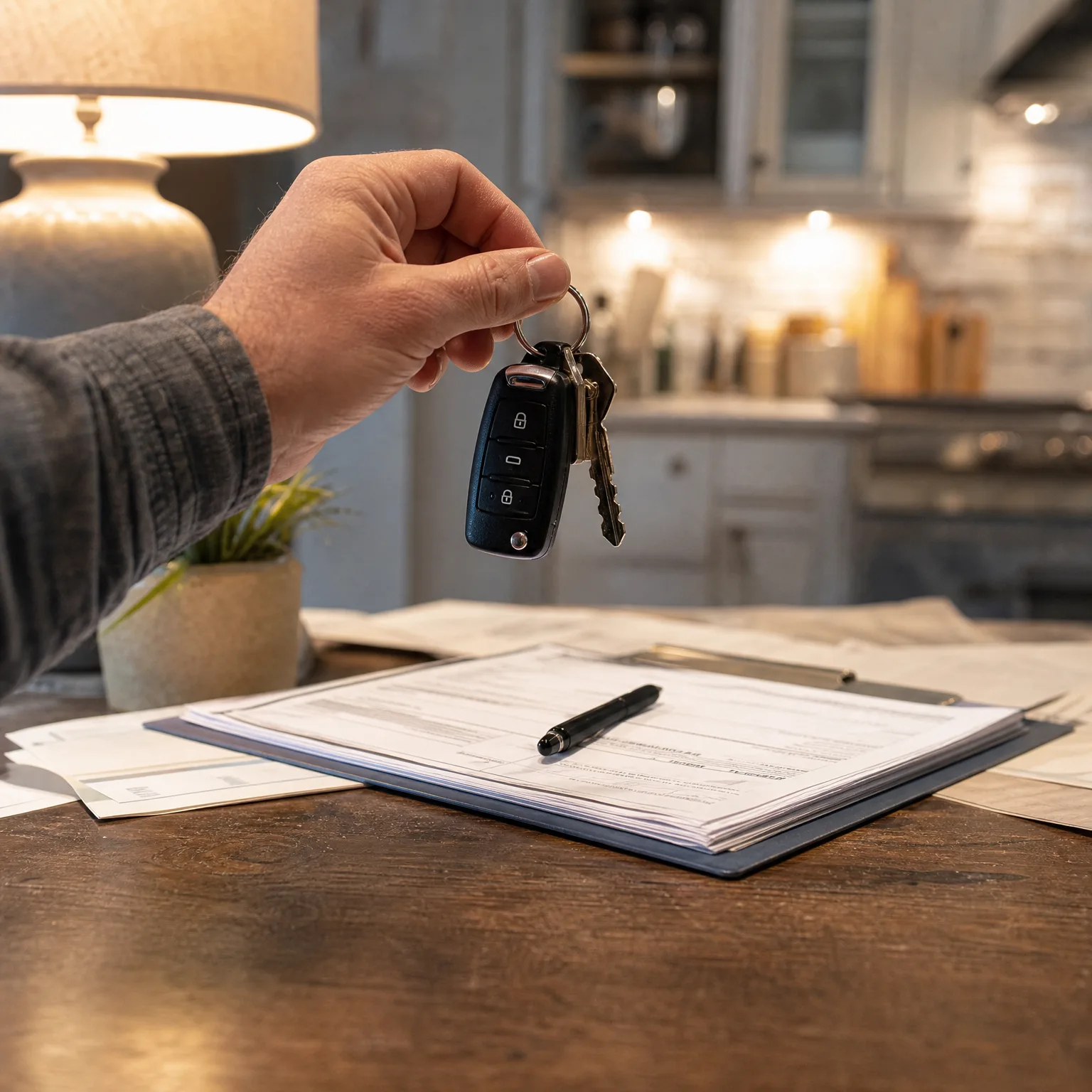
When You're Exposed Even With Active SR-22 Filing
The coverage gap appears when you borrow a car from an underinsured owner and cause an accident with damages that exceed both the owner's limits and your non-owner limits combined. If the owner carries $25,000 per person and you carry $25,000 per person on your non-owner policy, total available liability coverage is $50,000 per person. An injured party with $80,000 in medical bills can sue you personally for the remaining $30,000 even though you held an active SR-22 filing the entire time.
This scenario is more common than it appears. Ohio's minimum liability limits were set decades ago and haven't kept pace with medical cost inflation. A moderate-injury accident involving an ER visit, imaging, and follow-up care can easily exceed $50,000. If you're driving regularly for work or transporting passengers, borrowing a car from someone who carries only state minimums stacks your risk rather than eliminating it.
Increasing your non-owner policy limits to $50,000/$100,000 or $100,000/$300,000 costs an additional $8–$15 per month but closes the gap. The SR-22 filing itself has no coverage component — it's a compliance certificate the BMV requires. The liability limits you purchase on top of the SR-22 filing determine whether you're actually protected or just technically compliant.
$40–$65/month
Ohio Non-Owner SR-22 Premium Range
Non-owner SR-22 policies in Ohio with state minimum liability limits typically cost $40–$65 per month depending on your violation history and the filing period the BMV assigned. Policies with higher limits ($50,000/$100,000 or $100,000/$300,000) add $8–$15 per month. Estimates based on available industry data; individual rates vary by driving history and coverage selections.
What the Owner's Policy Covers and What It Doesn't
The vehicle owner's liability policy covers bodily injury and property damage you cause while driving their car, up to the owner's policy limits. It does not cover damage to the vehicle you're driving — that's covered under the owner's collision or comprehensive coverage, which may or may not extend to permissive drivers depending on the owner's policy language. Your non-owner SR-22 never covers damage to the borrowed vehicle itself; non-owner policies exclude physical damage coverage entirely.
If you cause an accident that damages the borrowed car, the owner files a collision claim on their own policy and pays their own deductible. That claim appears on the owner's insurance record, not yours. The owner's rates may increase at renewal even though you were driving. Some owners avoid this by asking you to pay the deductible and repair costs out of pocket rather than filing a claim. Your non-owner SR-22 provides no financial protection in this scenario — it only addresses third-party liability, not first-party vehicle damage.
Compare Ohio Non-Owner SR-22 Policies Now
Non-owner SR-22 coverage in Ohio satisfies the BMV's filing requirement and provides excess liability protection when you borrow cars, but it doesn't replace the owner's policy and it doesn't cover damage to the vehicle you're driving. If you're borrowing cars regularly, verify the owner carries adequate liability limits — or increase your own non-owner limits to close the gap. Enter your ZIP code above to compare Ohio non-owner SR-22 policies with adjustable liability limits from carriers writing in your county.
The Two Scenarios Where Non-Owner Coverage Actually Pays
Scenario one: you borrow a car from someone who let their insurance lapse or never carried coverage. The vehicle has no policy attached to it. In this case your non-owner liability policy becomes primary and responds to any claim up to your policy's limits. This is the cleanest use case for non-owner coverage — you're driving an uninsured vehicle and your policy fills the entire liability exposure up to $25,000/$50,000/$25,000 or whatever limits you purchased.
Scenario two: you borrow a car from an insured owner but cause an accident with damages exceeding the owner's liability limits. If the owner carries Ohio minimum limits of $25,000 per person and you injure someone with $60,000 in medical bills, the owner's policy pays the first $25,000 and your non-owner policy pays the next $35,000 up to your own per-person limit. Your non-owner policy acts as excess coverage layered on top of the owner's policy, protecting you from personal lawsuit exposure above the owner's threshold.
Get Your Free Quote
Get My Ohio Suspended License Insurance QuoteFrequently Asked Questions
Does a non-owner SR-22 policy in Ohio cover me when I borrow someone else's car?
Yes, but only as excess coverage. The vehicle owner's liability policy pays first. Your non-owner SR-22 only responds after the owner's limits are exhausted or if the owner has no insurance. If you borrow a car from an insured owner and cause an accident within the owner's liability limits, your non-owner policy provides no functional coverage for that claim.
What happens if I damage the car I'm borrowing with a non-owner SR-22 policy?
Your non-owner SR-22 policy does not cover damage to the borrowed vehicle. The vehicle owner files a collision claim on their own policy and pays their own deductible. That claim appears on the owner's record and may increase the owner's rates at renewal, even though you were driving. Non-owner policies exclude physical damage coverage entirely.
Can I be sued even if I have an active SR-22 filing in Ohio?
Yes. The SR-22 filing is a compliance certificate, not insurance. If you cause an accident with damages exceeding both the vehicle owner's liability limits and your non-owner policy limits combined, the injured party can sue you personally for the remaining amount. Carrying higher non-owner liability limits ($50,000/$100,000 or $100,000/$300,000) reduces this exposure.
How much does non-owner SR-22 insurance cost in Ohio?
Non-owner SR-22 policies in Ohio with state minimum liability limits typically cost $40–$65 per month depending on your violation history and the required filing period. Adding higher limits ($50,000/$100,000 or $100,000/$300,000) costs an additional $8–$15 per month. Estimates based on available industry data; individual rates vary by driving history and coverage selections.
Do I need non-owner SR-22 insurance if I never drive?
If the Ohio BMV required SR-22 filing as a condition of license reinstatement, you must maintain an active SR-22 on file for the entire period the BMV assigned — typically 3 years for OVI offenses. Letting the filing lapse triggers immediate license re-suspension even if you're not driving. Non-owner SR-22 is the correct product when you don't own a vehicle but need to satisfy the BMV's filing requirement.
What is the difference between a non-owner SR-22 and a regular SR-22 in Ohio?
Both are the same SR-22 filing — a certificate your insurer sends to the Ohio BMV proving you carry liability coverage. Non-owner SR-22 is attached to a non-owner liability policy, which covers you when driving borrowed or rented cars but excludes vehicles you own or regularly use. Regular SR-22 is attached to a standard auto policy covering a specific vehicle you own.